Monday, June 11, 2012

Headless Imagination

Creative types tend to let their imaginations get away from them. For example, take the experience I had one evening when I was a wee lad.

The Case of the Galloping Hessian

My family had a pretty good sized property growing up and it was my job to feed the dogs tied up in the back of the lot. Our yard light lit up most of the back lawn, but couldn't quite reach into the back where the dogs were. Invariably I always left feeding the dogs until after dark, so I would have to trek into the quiet night.

In those lonely walks I often let my imagination get away from me. I was a young boy who liked to read books. Books about crooks and restless spirits, where the supernatural was always somewhere near. But I also liked to read about real life monsters like Bigfoot and Nessie (over in Loch Ness). Not to mention everyone knew those little grey men were just waiting to drop down in their UFOs and abduct me (thanks, Mr. Spielberg).

Once my payload of doggie kibble and liquid libations were suitable deposited, I would walk very courageously back to the house. About midpoint, I'd end up running like a bat-outta-hell before them stupid little aliens caught me in some kinda paralyzing ray (thanks again, Mr. Spielberg).

One night, I managed to maintain my stiff upper lip until I almost made it to the house.

And then I heard something...

It sounded, I kid you not, like a horse galloping right behind me. Instantly, I *knew* the Headless Horseman was gonna get me. Like a bolt of lightning, I lept up onto the back porch and swept the door open. As I rolled inside, I took a quick look... Naturally, there wasn't anything there. I stopped and stared, looking for the missing horse, but it just didn't exist.

Lets face it, it wasn't the Headless Horseman running roughshod over me that summer night, it was my imagination.

Imagination Unchained

I've wondered about that night every now and then. How had my imagination got so carried away that it created a sound for something that wasn't there? At the recent LDStorymakers writing conference, I think I found my answer (no, it wasn't schizophrenia).

Head shot for one of my characters.
When depicting something that isn't real, creative types force their minds to 'see' what they're writing/painting/portraying. One writer talked about how she creates characters while she's chauffeuring her kids around and imagines that they're actually sitting in the car. One time, she created a kid that was so real, she was upset when they got where they were going because that 'child' was missing.

It's that way with me too. I try to really see what I'm doing as I work. When I'm creating my characters, I use head shots and character interviews to make them 'real.' It's a fun process and I'm always willing to show my pics and written work for character creation, but let me explain the most private part of my process, the character interview.


Character Interviews
As an example, one of the tools I use for creating better characters is the character interview. When I do it, I feel like if someone hears me, I'll get a one way ticket to the funny farm (it's a lot less funny than you'd think). So I have a few rules to protect me.
  1. I make sure nobody can hear me. This usually mean waiting for the kids to be in school and the wife to be at work. Late at night... well... somebody might still hear and wonder who I'm talking to. I get laughed at when someone sees me write because I usually do 'interesting' facial expressions. It's all well and good, but the interviews are very personal for me so NOBODY gets to hear them.
  2. I talk in the speech patterns of the character. I'm an old thespian, so if the character is Russian, I try to do a Russian accent. Even a bad accent gets me in the character's head. I also include age appropriate dialog (or what I think is anyway).
  3. I let the characters say anything. Usually my protagonist just wants to tell me I'm an asshole (his words) and how much he hates me for making his life hell. Sometimes he's so mad he doesn't even want to talk to me, but when he calms down, I ask my questions. Letting your character say anything is probably the most important part for making lifelike characters.
  4. I record it for inspiration later. I'm a ham, but these soundtracks are for my ears only. I record them when nobody is home for a reason. But I do feel that I'm actually interviewing the characters, so listening to past interviews might give me inspiration for a current scene.
So how do you use your imagination? Do work outside your head, or is everything locked inside? What are some of your favorite ways to develope your imagination? Has your imagination ever got carried away?

Monday, June 4, 2012

Composting with Discovery Writing


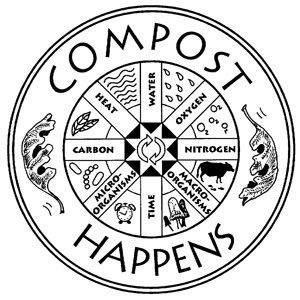
compostLast week I listened to the audiobook of Writing Down the Bones by Natalie Goldberg. In it she discusses several writing techniques useful to beginning writers. The one that surprised me the most, was one called composting.


"Our bodies are garbage heaps: we collect experience, and from the decomposition of the thrown-out eggshells, spinach leaves, coffee grinds, and old steak bones of our minds come nitrogen, heat, and very fertile soil. But this does not come all at once. It takes time. Continue to turn over and over the organic details of your life until some of them fall through the garbage of discursive thoughts to the solid ground of black soil." Writing Down the Bones (p. 18-19).

She goes on to discuss how the composting of ideas (or stories), and letting them sit over time allows them to compost into better stories (poems, etc.). Several other authors, including Stephen King, talk about finishing your rough draft and then leaving it alone for two to three months, and I think this is their 'compost phase.' But I thought I was broken for doing it the way I do. After all, everything everybody else writes is flawless on day one, right? Well, okay, yours maybe, just not mine.

My Compost Pile
I've had several experiences when composting was invaluable. And when I think about it, most of my work composts because I like to let it set for a spell and see how it looks in a day or two. For instance, I wrote a simulated combat scene. Ten pages later, I realized I was sitting on the biggest pile of crap in the English lexicon. Gee, I thought. Someone could sell this as weapons-grade fertilizer.

Fresh with my humiliation, I went to my day job. For two days I thought about the chapter that had to be fixed. I tinkered with other chapters, but I knew I still had to go back and redo the entire simulated combat chapter. *Sigh*

So I got thinking about what exactly didn't work. What parts I didn't like and what could I do to really make it pop. I turned the chapter over and over. Two days later, I got an idea. I got a wonderful awful idea (boy, were my characters in trouble). I turned the chapter over and it bloomed.

Recently, I had my big emotional climax fall flat on it's face. It just wasn't singing. So I let it set for a few days (almost a week), and thought about what I could do to improve what wasn't working. I turned it and turned it. It took almost a full week before my brain realize that my subconscious was passing me the ball for an awesome slam dunk. Little clues had been cascading for several chapters and it was payoff time.

Composting in the Writing Community
Part of me wonders if this technique is exclusive to discovery writers. Do plot outliners organically grow their story, or do they use the same tool in a different way? Does everyone get those 'ah-ha!' moments that seem to be so prevalent with discovery writing?

TheBackyardGardeninMay.JPGSince I'm 'fairly' new to writing craft, I think this is probably something that everyone does, to one degree or another. We lay down some crap. We write a practice chapter or two. And then we let it sit in the heat of our minds and compost. Sometimes it may take longer than others, but when we finally have the rich black soil that we can plant our words in... nothing else can compare.

Do you compost or have you had success with this technique?

Monday, May 28, 2012

Reevaluating Your Goals

We're all really good at giving ourselves crap and I'm certainly no exception. Take for instance, my writing goals.

My Current Goal
I set a goal to write 2,000 words per day, every day, for a grand total of 14,000 per week. (With this goal, an average of 300 words per page, 8 pages per chapter, would give me almost a chapter a day.)

I was able to make this goal once upon a time, so it's reachable, right? Apparently not.
Super Genius

My Reality
What I'm currently writing is 700-1,000 words per day (new word count including words cut during editing), 3-5 days a week, for maybe 3,000-5,000 per week. That means, every day I'm failing by half. And every week I'm screwing up by even more than that.

Fail. *Sigh* Fail, fail, fail.

Poop.


Be Prolific or Die
Kevin J. Anderson, one of the most prolific writers I know (of), said he writes between 300,000 and 500,000 words every year. Presenting the LDStorymakers keynote address this year, he said, "In today's market, you can't make a living writing one book a year. If you want to make a living as a writer, you have to be prolific or die." (I'm really hoping he didn't mean 500,000 per book. Next year, he has seven books coming out. Dude would get an aneurism.)

So I thought, "I'll bet Kevin J. Anderson does at least 14,000 words per week."

Yeah... Have I ever mentioned how bad I am at math?
14,000 words X 52 weeks = 728,000 words
Whoa. If I was making goal, I'd be schooling Kevin 'Wordsmith' Anderson.

As it turns out, 500,000 a year comes out to about 1,380 per day. So WHY am I beating myself up? (Someone check my math because I'm feeling pretty cool right now.)

Why Goals Are Important
Every week in the real world, my boss and I have a goal that I'll work 40 hours every week (okay... okay... it's an expected result, but stick with me). My boss and I may disagree on what 'work' entails, but I like cash and he likes production, so we make it work. There are even some hefty penalties if I don't make my goal.

Goals set a requirement for something we want to attain. Regardless of the type of goal, it all boils down to your target. And usually, your goal will need to be broken down into smaller goals. 

Want to be a certain weight? Maybe you should drop drinking 44oz of pop a day and watch your portion sizes. Want to run the Boston Marathon? Watch your diet and start timing your mile (really, I have no idea how you prep for a marathon...). Want to write a book? Remember, writers write, so start writing and keep a list of what authors you like do in their work.

Some Famous Things To Keep In Mind
Tracy Hickman said at CONduit 2012, "Everyone has to find their own way, but its never the same way. Everyone has to pay their own dues, but they're never the same dues." YOU have to find your way. You are responsible for whether you succeed or not. If something isn't working, then try something else. Just keep MOVING!

Poet Kathleen Norris said, "Before you begin a thing remind yourself that difficulties and delays quite impossible to forsee are ahead.... You can only see one thing clearly, and that is your goal. Form a mental vision of that and cling to it through thick and thin." A lot of things will come up that will interfere with your goals, but if you're going to be a functioning human, you have to do as Laura Hickman said, "You have to give yourself permission to do something you love." Even if its only tiny steps forward (250 words per day, or 100, or even 50!), do what you love.


Attainable Goals
So, I'm changing my writing goals to something more realistic (but still challenging): 1,000 per day, 5,000 per week, 20,000 per month. And since I prefer to write YA (Young Adult), that's a rough draft (70,000 words) every three and a half months! Almost four a year!

Writing Avengers
One of the most critical things in making successful goals is making them achievable. With my new goals, will there be days when I nail down 3,000+ words a day? Of course! And those will be VERY good days, but it's not fair to set my 'high water mark' as my everyday goal. Doing that only sets me up to fail and that just makes me beat myself down. When I feel good about what I'm achieving, I'm looking forward. And something tells me, all of us are like that.

So... heads up! Set some attainable goals, and remember, as James Broughton said, "The only limits are, as always, those of vision."

Monday, May 21, 2012

Castle Contentions

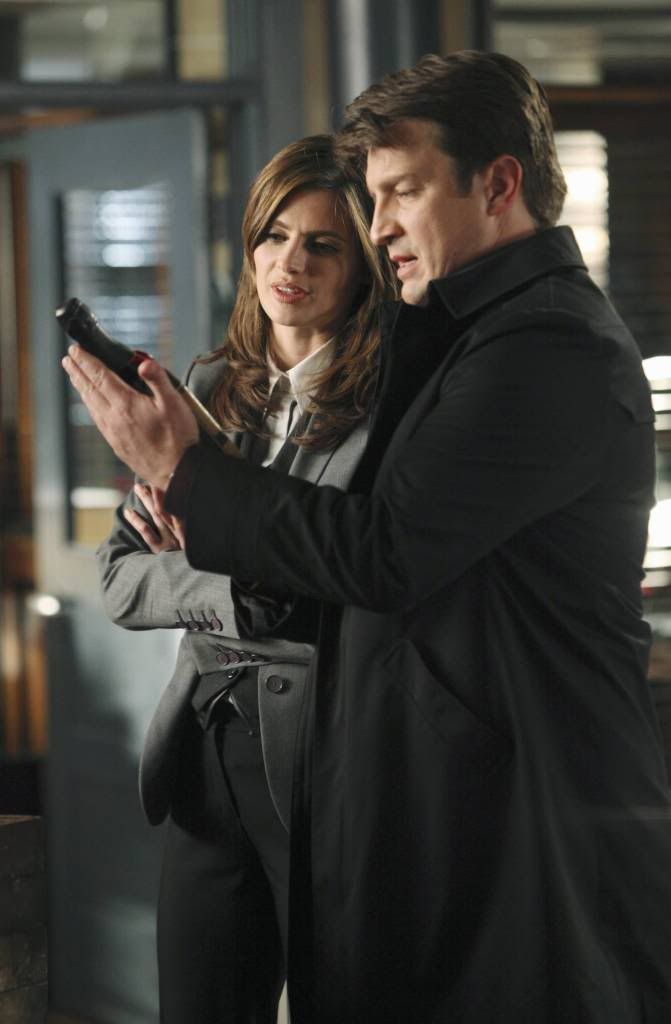
cxgaf.jpg castle and beckett
Beckett and Castle
I'm a huge Nathan Fillion fan, which naturally makes me a huge fan of ABC's Castle. My wife and I sit up Tuesday nights (as soon as I get home from work) and watch new episodes on Hulu Plus. We were particularly excited to see this years season finale (titled 'Always') because of the sneak peak we'd seen.

So we watched the episode and loved it.

And yet... I felt something in the episode didn't work for me. Something that made me feel like the writers botched the character's motivation at the finish line.

** Spoiler Warning ** Spoiler Warning **

Hot and Bothered
I've talked about it with a few people and I think they went where the writers wanted them to go. (To see the conclusion of 'Always', click on the link below and watch it on YouTube -- It's just under three minutes).

As the clip shows, Castle and Beckett finally make their connection and begin kissing heavily. Castle opens her shirt and touches the bullet scar over her heart before holding her hand and walking into his apartment.

My whole problem is that I think the shirt thing is too sexual. Everyone I talked to thought it was as well, but they thought that after four years of being friends, they were just ready to rip each others clothes off.

So after watching it again, I think the writers were going for the connection with how close Castle came to losing Beckett when she was shot in season three's finale. But regardless of whether they were ripping their clothes off, or whether Castle wanted to touch her scar, it came off wrong for me and here's why.
128123_164
Click to watch conclusion of 'Always'

Castle and Beckett's relationship isn't about sex.

In four years, Castle hasn't opened Beckett's clothes in any sexual way. In four years, they've never crossed the line from friendship into something more. Have there been times when they thought about it? Of course! But when you love someone so much that you just want to be in the same room as the object of your affection, sex (while a wonderful part of a healthy relationship) isn't what you really care about. And I believe Castle and Beckett are definitely deeper in their relationship than just wanting to push each other over and bump uglies.

I think Hollywood has a major problem because they feel sex equals intimacy. You would almost wonder if anyone on the West Coast ever fell in love without jumping into bed first. It does happen in the real world, crazy but true.

The writers do try to redeem 'Always' by having Castle and Beckett hold hands and walk into the apartment together, but even that feels like they are heading straight for the bedroom (nudge-nudge, wink-wink). Why not have two or three tentative kisses, the smile, the hand holding, and then Castle leads Beckett into the apartment? Intimate with the smoldering passion we've come to expect.

The Mirror Cracked 
CASTLE
Click to watch Conclusion of The Limey
There is one other episode this season that cheeses me off with what I feel is bad characterization.

 In the episode titled, The Limey, Castle realizes that Beckett has lied to him and begins pursuing other meaningless relationships. My beef with this episode, as the clip shows, is that Beckett, after being rejected by Castle, goes out with the handsome detective from Scotland Yard.

I'm not saying she can't go out with whoever she wants, but how many episodes have we seen where Castle swallows his pride and goes home alone after seeing Beckett heading out with another man? If Castle is man enough to know that if he can't have Beckett and he'd rather be alone, then why should Beckett be written so shallow that she wouldn't go home alone because she's not going with Castle?

It was a total misfire with me and breaks the mirror image that Castle and Beckett were finally getting into the same mindset. This is just one of several episodes where Castle's writers do something that resets the emotional balance between the two characters, ultimately making their connection in 'Always' even more surprising/unbelievable.

Ladies and Gentlemen of the Jury
Anyway... all this nitpicking at these episodes made me remember something David Farland said at his Writers Death Camp. He said people don't like watching movies and T.V. with him because he likes to tear apart the scripts and analyze them. Unfortunately, or fortunately as the case may be, I'm obviously starting to do the same.

So what do you think? After watching the clips, is my interpretation correct or am I just up in the night? Do you tear apart movies and T.V. shows to find what you don't like? Do you find times when you wonder why characters act like they shouldn't?

Popular Posts